
Canada is home to more than 800 native bee species and over 300 resident butterfly species. The majority are generalist foragers that visit a wide range of flowers, but a significant subset have specialised relationships with specific plant genera — relationships that mean certain pollinators cannot complete their life cycle without specific native plants being present in the landscape. That distinction shapes how a pollinator-focused meadow or garden should be designed.
The Specialist Relationship Problem
Among the best-documented examples in Canada is the Monarch butterfly (Danaus plexippus). Monarch caterpillars feed exclusively on milkweed (Asclepias species). With native milkweed populations declining across southern Ontario due to agricultural intensification and roadside mowing, Monarch breeding habitat has contracted sharply over the past 30 years. The Canadian Wildlife Federation estimates that milkweed abundance in Ontario's agricultural regions has declined by over 90% since the 1990s.

The implication for planting is straightforward: including even a small clump of Asclepias tuberosa (butterfly weed) or Asclepias syriaca (common milkweed) in a meadow or garden directly supports a species that cannot use anything else. This is categorically different from planting a non-native flower that happens to attract bees.
Planting in Drifts, Not Dots
A single plant of any species has limited pollinator value. Bees navigate primarily by scent and colour from distances of 50–100 metres. A solitary coneflower in an otherwise bare or monoculture landscape may attract occasional visitors, but it does not create the consistent odour plume that draws bees in repeatedly across a season.
Pollinator Partnership Canada's ecoregional planting guides consistently recommend grouping the same species in patches of a minimum of three to five plants, and ideally nine to twenty-five where space allows. The combined scent output of a larger group is detectable at greater range and reduces the energy cost for bees searching new foraging areas after the previous patch is exhausted.
Research from the University of Guelph found that bumble bee foraging efficiency increased significantly when target plants were grouped in patches rather than distributed singly — a finding consistent with observed pollinator behaviour across multiple species.
Continuous Bloom from April Through October
A critical design constraint for pollinator gardens is the continuity of the bloom sequence. Bumble bee queens emerge from overwintering as early as late March in southern Ontario when temperatures consistently exceed 8°C. Early spring bloom — primarily from willows, maples, and native spring ephemerals like Sanguinaria canadensis (bloodroot) — is essential for colony establishment. If no early-season pollen is available, newly emerged queens cannot provision the first worker brood.
Late-season bloom is equally important. New bumble bee queens are produced in late August and September, and they feed heavily before entering dormancy. Canada goldenrod (Solidago canadensis) and New England aster (Symphyotrichum novae-angliae) are among the most valuable late-season native species for this purpose — both bloom September through October in most Canadian provinces and are heavily visited by multiple bee species.
| Plant Species | Bloom Period | Primary Beneficiaries |
|---|---|---|
| Salix spp. (Native willows) | March – April | Bumble bee queens, mining bees |
| Aquilegia canadensis (Columbine) | May – June | Hummingbirds, bumble bees |
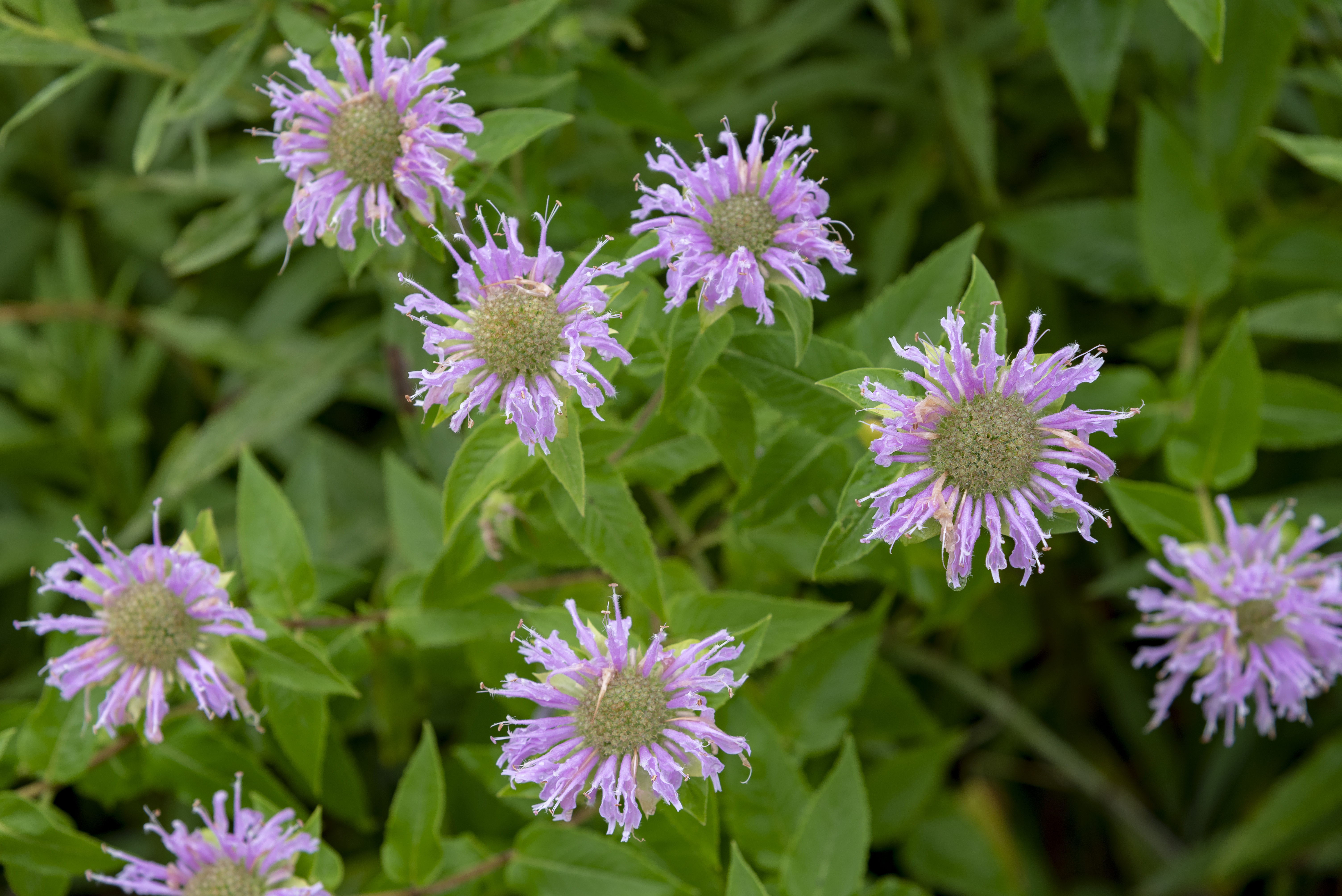
| Monarda fistulosa (Wild Bergamot) | July – August | Bumble bees, sweat bees, butterflies |
| Echinacea purpurea (Purple Coneflower) | July – September | Sweat bees, bumble bees, painted ladies |
| Asclepias tuberosa (Butterfly Weed) | June – August | Monarchs (larval host), swallowtails |
| Solidago canadensis (Canada Goldenrod) | August – October | Bumble bee queens, monarch adults, beetles |
| Symphyotrichum novae-angliae (New England Aster) | September – October | Bumble bee queens, hairstreak butterflies |
Nesting Habitat Is as Important as Flowers
Over 70% of Canada's native bee species nest in the ground. Patches of bare or sparsely vegetated soil — particularly south-facing slopes with loose, well-drained texture — are the primary nesting habitat for mining bees (Andrena spp.), sweat bees (Lasioglossum and Halictus spp.), and cellophane bees (Colletes spp.). Dense turf grass, mulch, and impermeable ground covers eliminate this habitat entirely.
The remaining native bees (roughly 30%) are cavity nesters that use hollow plant stems, pithy stems, beetle borings in deadwood, and occasionally abandoned rodent burrows. Leaving standing dead stems of plants like goldenrod, sunflower, and Joe Pye weed through winter provides overwintering habitat for these species. A meadow that is mowed flat in October removes this habitat and directly reduces the population of cavity-nesting bees that would otherwise return the following season.
Avoiding Pesticides Near Pollinator Habitat
Systemic insecticides — particularly neonicotinoids (clothianidin, imidacloprid, thiamethoxam) — persist in plant tissue and soil for months to years after a single application. Bees foraging on treated plants accumulate sublethal doses that impair navigation, reduce larval survival, and interfere with winter queen survival. The City of Toronto's live green programme explicitly advises against any insecticide use in pollinator gardens, including products marketed as "organic" or "natural" that include pyrethrin or spinosad at flowering time.
Where pest management is necessary in an adjacent vegetable garden or orchard, timing applications to early morning or evening — when pollinators are less active — and avoiding bloom periods reduces exposure. Contact insecticides degrade faster than systemics and carry lower persistence risk when used selectively.

